
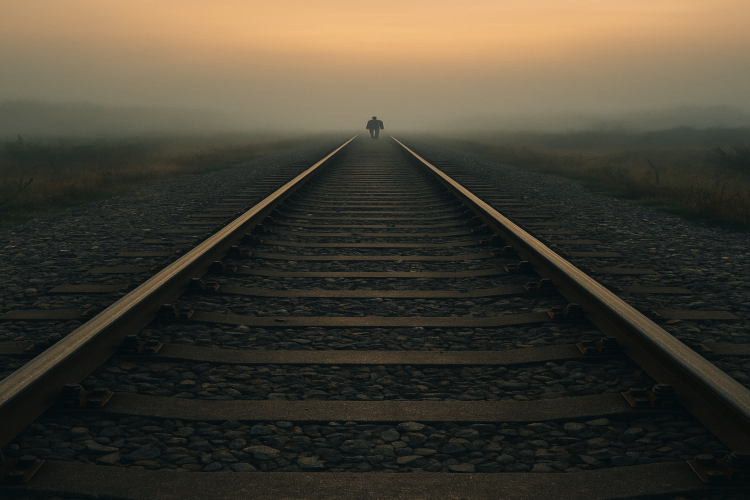
Every time the world takes a step forward, somebody out there feels personally wounded by it. You see it in the headlines, like that story about a sabotaged railway in Poland, a modern supply line blown apart because progress made someone uncomfortable.
Not threatened. Not truly endangered. Just uncomfortable.
And that discomfort is rarely noble grief about policy or some higher cause. Most of the time, it is a bruised ego wearing a mask. Human advancement has always moved faster than human maturity. We can build systems powerful enough to connect continents, but we still have not figured out how to keep fragile egos from picking up rocks and throwing them at the machinery. Jealousy, raw, aching jealousy is one of the oldest rocks in the pile.
Progress Creates Winners. Human Nature Creates the Rest.
Whenever technology improves, whenever infrastructure expands, whenever nations strengthen alliances, there is always someone who sees that forward motion as a slap across their face.
Not because they are actually harmed by it, but because it reminds them of their own stalled life. You know this if you have ever watched a workplace sour because someone did not get a promotion, or heard a man tear down another person’s success just to hide his own laziness. The same patterns that play out in offices and shops play out on the world stage. The stakes are just higher and the tools are louder.
People who feel irrelevant do not simply fade into the shadows. Some claw for recognition in the ugliest ways possible. That rail line in Poland was not just about steel, trains, or logistics. At the emotional level, it was about someone thinking:
“If I cannot win, I will make sure nobody else does.”
That one sentence explains far more violence in human history than most textbooks ever will.
Jealousy Turns Potential Into Poison
The jealous mind is not complicated. It is predictable. A jealous person sees someone else’s success not as proof that progress is possible, but as proof that they failed to rise to the same level.
Many of these people are smart. Many have real ideas. What they lack is self-governance the will to steward their potential instead of resenting those who did. When a person believes they could have done better but knows, deep down, that they burned their own chances, the resentment does not stay quiet. It ferments. It thickens. It searches for a target.
Eventually that resentment hardens into a story: the world has wronged them. And once someone is sure they have been wronged, destructive ideas begin to feel righteous. You see it in lone-wolf attacks, in sabotage, in extremist recruitment, in hacking and vandalism and political violence. Not all of that is pure ideology.
A shocking amount of it comes from people who made poor choices, refused to accept responsibility, and then blamed the world for leaving them behind. Jealousy is rarely confessed out loud, but it is often acted out in full view.
“They Built Something Without Me.”
Underneath the slogans and statements, that is the emotional core. A person feels like an outsider in a world that moved forward without their permission. They believe they should have influence, but life did not hand it to them. They start to see every form of progress as a personal insult.
That outsider feeling grows into bitterness, entitlement, anger, and loneliness. It grows into a craving for recognition, any recognition. If they cannot get attention through accomplishments, they will take it through disruption. If they cannot lead, they will sabotage. If they cannot build, they will break.
Violence is the only skill some people are willing to practice.
Progress Doesn’t Make Everyone Happy, It Exposes Them.
Every new era exposes emotional cracks in society. When trains first connected cities, someone saw it as a threat. When electricity replaced candles, someone called it witchcraft. When mechanization arrived, people smashed the machines. When the internet took off, someone immediately tried to steal, hack, and manipulate it. Now AI grows, and people who never bothered to understand it fear being overshadowed by tools they will not learn to use.
The pattern is old. The language and technology are new.
Most people adjust. Some grow. Some find opportunity. But the group that refuses to grow feels attacked by evolution itself. They believe the world owes them a stage, and when they do not get one, they light a match.
Destruction Is the Shortcut of the Undisciplined
Building anything worthwhile takes time. Growing takes humility. Learning takes patience. Collaborating takes maturity. Contributing takes consistency. Destroying something takes none of those traits.
Anyone with bitter hands can break. Anyone with a little resentment can hack, sabotage, or vandalize. People often dress violence up as strength. It is not strength. It is the collapse of discipline—the moment someone decides it is easier to burn than to build.
Our modern world gives these undisciplined people more powerful tools than any generation before them. That is not a technology problem. It is a character problem.
The Real Crisis Isn’t Technological. It’s Emotional.
Human advancement is not the issue. Human insecurity is. We are living in a time when the tools are powerful, but the emotional skill sets are underdeveloped. We can engineer systems that run themselves, but we have not figured out how to raise people who can handle their own envy.
We can automate fleets, but not maturity. We can simulate intelligence, but not accountability. The gap between invention and emotional development becomes the breeding ground for the worst acts.
That is why every leap forward seems to bring a backlash. The backlash is not truly about the invention. It is about the people who feel exposed by it.
Seeing This Clearly Changes How You Read the World
When you hear about sabotage, cyberattacks, lone-wolf violence, or attempts to disrupt infrastructure, do not stop at the political angle. Look at the human angle. Under the slogans and labels, you will often find the same root:
Someone believed progress left them behind, and they could not stand living with that truth.
A society’s biggest threat is not its technology. It is the individuals who feel threatened by somebody else’s growth. If you want a more stable future, you do not start with machines. You start with people, teaching them how to own their choices, how to grow with the world, how to handle failure without blame, how to be proud of someone else’s success, how to build instead of break.
Progress Isn’t the Problem.
The more the world advances, the more we will see the same split: those who rise with it and those who try to drag it backward. Every act of sabotage carries the same signature: a jealous mind trying to matter, a fragile ego dressed up as rebellion, a person who chose destruction instead of improvement.
As long as progress moves faster than emotional maturity, we will keep seeing these stories. Understanding that does not fix the problem, but it does clear the fog. You stop being surprised by sabotage. You stop being shocked by backlash. You stop wondering why progress attracts so much heat.
You see the world for what it is: a place where the tools keep getting better, while the human heart is still learning how not to be jealous of the people who know how to use them.
Recommended Resources
👉 Scrivener — the ultimate writing tool for authors.